What to Look For in a Great Play-Based Program
Quick Answer
A great play-based program gives children long stretches of meaningful play guided by skilled educators who intentionally connect that play to social, emotional, language, and early academic learning. Families should look for warm relationships, rich materials, and teachers who balance child-led exploration with gentle guidance.
What does “play-based” really mean?
You may hear the phrase play-based learning and wonder what it actually looks like day to day. Families in Milwaukee, WI, Glendale, WI, Fox Point, WI, and nearby communities, often look for these indicators when touring preschools.
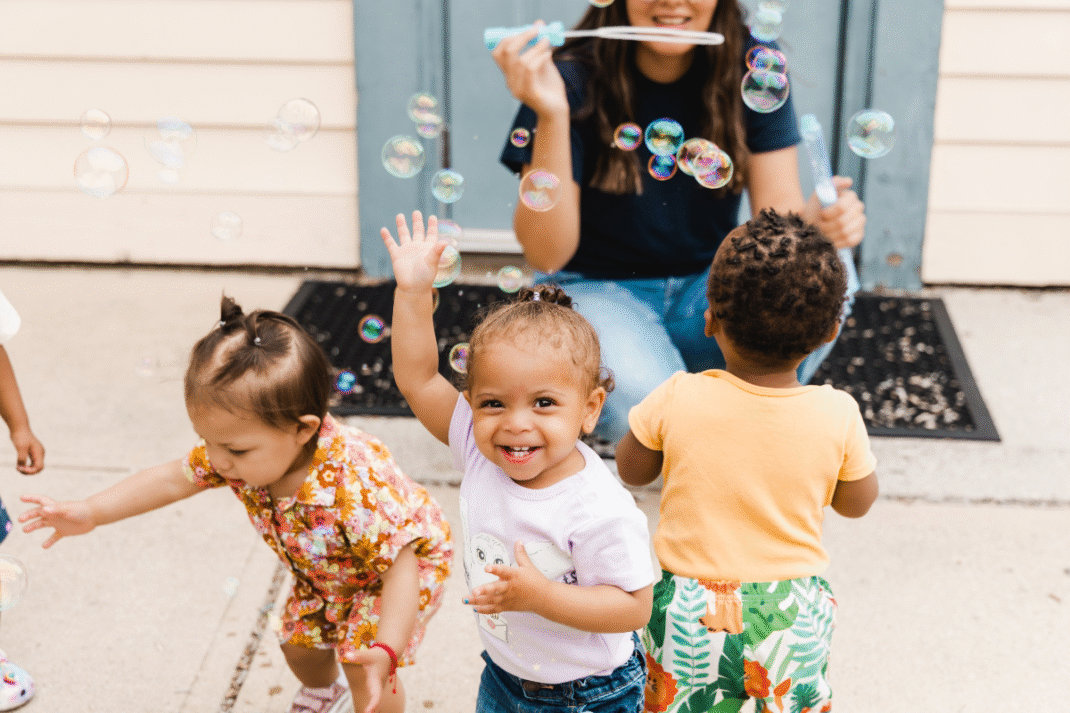
In a strong play-based classroom, play is the main way children learn. Children are actively engaged in experiences such as:
- building and constructing
- pretending and role playing
- exploring materials and textures
- talking with peers
- experimenting and problem solving
Learning happens through hands-on experiences that feel engaging and purposeful, not through long periods of sitting or completing worksheets.
Play is joyful, but it is also intentional. When thoughtfully planned, play supports language development, early math thinking, self regulation, and focus. This understanding aligns with how NAEYC describes the role of play in high-quality early learning programs.
The role of teachers in a play-based program
Warm, responsive relationships
High-quality play-based programs are grounded in strong relationships. Teachers take time to truly know each child and respond with care and respect.
You should see educators:
- sitting at children’s level
- listening closely to their ideas
- talking with them during play
- joining play to support social interaction
Through these daily moments, children learn how to communicate, solve conflicts, and build friendships. Feeling safe and understood helps children fully engage in learning.
Intentional guidance through play
Play-based learning does not mean children are left playing on their own. Skilled teachers thoughtfully design the environment, introduce new ideas or vocabulary, and ask open-ended questions during play.
This approach, often called guided play, helps children deepen their thinking while still allowing them to lead. Teachers support learning without taking over, preserving children’s curiosity and enjoyment.
What to notice in the environment and materials
A strong play-based classroom feels inviting, safe, and well organized. Spaces are arranged into clear interest areas such as:
- blocks and construction
- dramatic play
- art and creative materials
- books and literacy spaces
- science and sensory exploration
Children can move freely, choose materials independently, and take responsibility for putting things away.
Look for open-ended materials like blocks, loose parts, art supplies, and pretend play props. These materials encourage creativity, collaboration, and problem solving. Materials should rotate over time to stay interesting and appropriately challenging.
You may also see photos, notes, or examples of children’s work displayed at their eye level. This documentation helps children reflect on their learning and helps families understand how play connects to growth.
Daily rhythm and family partnership
A balanced daily schedule
High-quality play-based programs protect long blocks of uninterrupted play, often at least 60 minutes. This gives children time to stay focused, revisit ideas, and build deeper understanding.
A balanced day typically includes:
- extended play periods
- time outdoors
- a mix of active and quiet choices
- both child-initiated and teacher-guided experiences
The rhythm feels predictable, calm, and flexible.
Communication with families
Strong play-based programs keep families informed about what children are learning and why. Teachers explain the purpose behind classroom play and share insights into children’s development.
Families should feel welcomed as partners. Many programs also share simple ideas for supporting play at home, helping learning feel connected across school and family life.
How play-based learning supports whole-child development
Through play, children grow across all areas of development.
Play supports:
- language growth through conversation and storytelling
- social and emotional development through cooperation and empathy
- physical development through movement and active play
- cognitive growth through planning, testing ideas, and problem solving
Frequently Asked Questions
What skills do children learn through play-based learning?
Children develop language, social skills, emotional regulation, creativity, problem solving, and early academic foundations through play.
How do teachers guide learning during play?
Teachers prepare the environment, introduce ideas or vocabulary, and ask thoughtful questions while allowing children to lead their play.
Is play-based learning structured or flexible?
It is both. The daily rhythm is predictable, while play experiences remain flexible and responsive to children’s interests.
How does play-based learning support kindergarten readiness?
Play-based learning builds confidence, independence, communication skills, and focus, all of which support a smooth transition to kindergarten.
Closing
At The Nurturing Nook, play gives children the space to explore, build relationships, and grow in ways that feel natural and meaningful. When learning is rooted in play, children develop confidence and curiosity that support them well beyond the early years.
Families in Milwaukee, WI, Glendale, WI, Fox Point, WI, and nearby communities are invited to schedule a tour at their local Nurturing Nook to see play-based learning in action.
Related Posts
All Posts
The Power of Play in Wisconsin: How Children Learn Through Exploration
How to Teach Kids About Global Holiday Traditions in Early Childhood Education in Wisconsin